Welcome! This manual guides you through Siemens washing machine operation, ensuring optimal performance and longevity. Siemens offers a 10-year motor warranty, reflecting durability.
Understanding Your Model
Identifying Your Siemens Washing Machine: Each Siemens washing machine boasts unique features, so knowing your specific model is crucial. Refer to the product label – typically located on the machine’s rear or inside the door – to find the model number (e.g., SN45M231).
Accessing Detailed Information: Siemens provides downloadable diagrams of machine construction on their website, aiding in understanding internal components. This is particularly helpful for maintenance or potential repairs. Knowing your model allows access to tailored support and troubleshooting guides.
Integrated Appliances: If you have an integrated model (like a Siemens gi81nsce0 freezer), understand its specific installation requirements and compatibility with existing kitchen cabinetry.
Important Safety Instructions
Electrical Safety: Always ensure the washing machine is properly grounded. Never attempt repairs yourself; consult qualified personnel. Disconnecting power for extended periods (hours) can sometimes reset error codes, but professional diagnosis is recommended.
Preventing Damage: Avoid dropping heavy objects onto the machine, especially the induction hob or glass surfaces, as damage may be irreparable. Be cautious when opening the top of a dryer, securing screws properly.
Child Safety: Keep children away from the machine during operation. Do not allow them to play with controls or the detergent dispenser. Always supervise if a repair is being undertaken.
Getting Started
Initial setup is key! Download construction diagrams from the Siemens website for installation guidance. Ensure proper leveling and connection before first use.
Initial Setup and Installation
Unpacking and Positioning: Carefully unpack your Siemens washing machine, removing all transportation bolts – crucial for preventing damage during operation. Position the machine on a firm, level surface. Adjust the feet to ensure stability and minimize vibration.
Connections: Connect the water inlet hose to both the machine and a suitable water tap, ensuring a tight seal to prevent leaks. Attach the drain hose securely, following the instructions for proper drainage. Verify the electrical connection meets local regulations and is properly grounded.
Diagrams & Assistance: Siemens provides downloadable construction diagrams on their website, aiding in understanding the machine’s structure. For integrated models, ensure correct alignment within cabinetry.
Loading Your Laundry
Sorting is Key: Before loading, carefully sort your laundry by fabric type, color, and soil level. Separate delicates, woolens, and cottons to prevent damage and color transfer. Empty all pockets to avoid damaging the machine or ruining clothes.
Capacity Limits: Do not overload the washing machine. Refer to the program guide for recommended load capacities for each wash program. Overloading can reduce washing efficiency and potentially damage the machine’s motor.
Even Distribution: Distribute the laundry evenly inside the drum to maintain balance during the spin cycle. Avoid wrapping items around the drum, as this can cause excessive vibration.
Detergent Dispenser Guide
Compartment I: This is for pre-wash detergent, used for heavily soiled items. Use powder or liquid detergent as indicated on the detergent packaging. Only use if the pre-wash option is selected.
Compartment II: This compartment is for the main wash detergent. Use powder or liquid detergent appropriate for the selected wash program and soil level; Follow detergent manufacturer’s instructions carefully.
Compartment III: This is for fabric softener and rinse aid. Do not exceed the maximum fill level indicated. Avoid direct contact of fabric softener with clothes, as it can cause staining.
Wash Programs Explained
Explore diverse programs! Siemens machines offer options for cottons, delicates, wool, and more, ensuring optimal cleaning and fabric care for every laundry load.
Cotton Programs – Detailed Overview
Siemens cotton programs are designed for robust, everyday fabrics. These programs utilize varying temperatures and spin speeds to effectively remove dirt and stains from items like t-shirts, bed linens, and towels. Several options exist, including an ‘Eco’ setting for energy conservation, and an ‘Intensive’ program for heavily soiled loads.
Consider load size and fabric type when selecting a cotton program. For lightly soiled items, a lower temperature is sufficient. Always check garment care labels before washing. Some models feature pre-wash options for particularly stubborn stains. Regularly cleaning the detergent dispenser and filter ensures optimal performance of these cotton programs, maintaining your machine’s efficiency and extending its lifespan.
Delicates/Silk Program – Usage and Care
The Delicates/Silk program on your Siemens washing machine provides gentle care for sensitive fabrics like lingerie, silk, and sheer materials. This program utilizes a reduced spin speed and lower water temperature to minimize stress and prevent damage. Always use a mild detergent specifically designed for delicates.
Place delicate items inside a laundry bag for added protection during the wash cycle. Avoid overloading the machine, as this can cause creasing and stretching. Never use bleach or fabric softener with this program. Inspect garments carefully after washing and air dry them flat to maintain their shape and prevent snagging. Proper care ensures the longevity of your delicate clothing.
Wool Program – Gentle Washing Instructions
The Wool program on your Siemens washing machine is specifically designed for washing woollen garments, ensuring they retain their shape and softness. This program uses a very gentle wash action and low temperatures to prevent felting and shrinkage. Always use a detergent formulated for woollens – standard detergents can be too harsh.
Before washing, check the care label of your wool garment. Place wool items inside a mesh laundry bag for extra protection. Avoid overloading the machine to allow for proper agitation. Do not use fabric softener, as it can damage the wool fibres. After washing, reshape the garment and lay it flat to dry, avoiding direct sunlight or heat.
Understanding the Control Panel
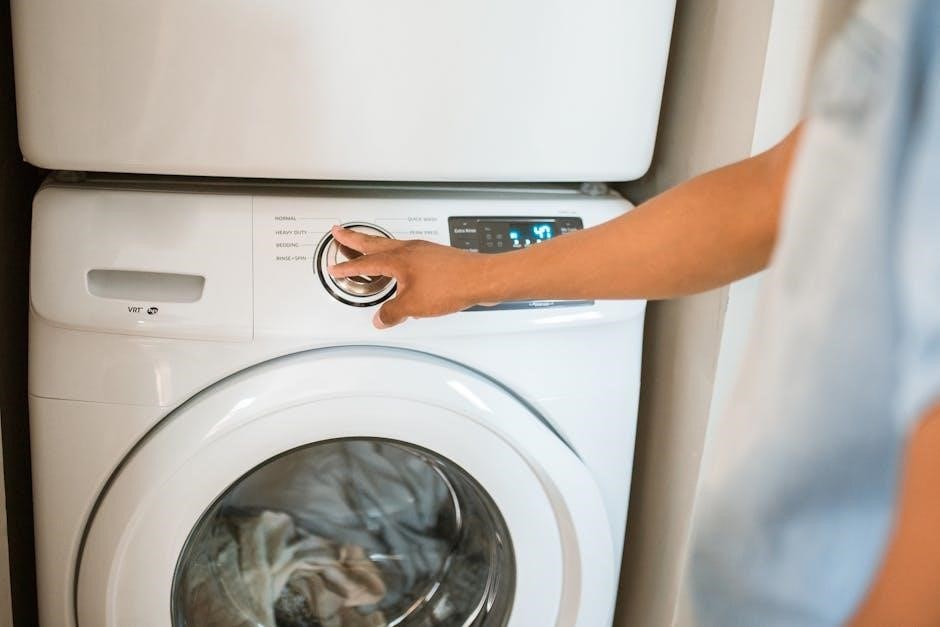
The control panel features display symbols and intuitive buttons for selecting wash programs, adjusting settings, and monitoring the washing cycle’s progress efficiently.
Display Symbols and Indicators
Decoding the display is crucial for seamless operation. Common symbols indicate program status – washing, rinsing, spinning, and completion. Error codes, like E31 (drainage issue) or 43 (motor fault), signal problems requiring attention.
The display also shows remaining time, temperature selection, and activated options. Indicators alert you to low detergent, empty water, or a door-locked state. Refer to the full manual for a comprehensive symbol glossary. Understanding these indicators allows for proactive troubleshooting and ensures optimal washing machine performance, potentially avoiding costly repairs. Siemens provides downloadable diagrams of machine construction on their website for detailed understanding.
Start/Pause and Option Buttons
The Start/Pause button initiates or temporarily halts a wash cycle. A prolonged press often cancels the current program. Option buttons modify wash parameters – temperature, spin speed, pre-wash, or extra rinse. These adjustments cater to diverse fabric types and soil levels.
Explore features like ‘Eco’ for energy savings or ‘Intensive’ for heavily soiled items. Some models offer delay start, allowing convenient scheduling. If a fault occurs, the machine may pause, displaying an error code. Remember, after component replacement (like carbon brushes for motor issues), a reset might be needed – try disconnecting power for a period.
Troubleshooting Common Issues
Encountering problems? Check error codes like E31 (drainage) or 43 (motor fault). Leaks or drainage issues require immediate attention; Siemens offers a 10-year motor warranty.
Error Codes and Their Meanings (E31, 43)
Decoding Error Messages: Your Siemens washing machine utilizes error codes to pinpoint issues. Code E31 frequently indicates a drainage problem – the machine isn’t effectively removing water. This could stem from a blocked drain pump or a kinked drain hose. Always check these components first. Code 43 signals a motor malfunction, potentially requiring professional attention.
After addressing a motor fault (like replacing carbon brushes), attempting a reset by disconnecting the machine from power for several hours may clear the code. However, persistent errors necessitate contacting Siemens support. Remember, Siemens provides a substantial 10-year motor warranty, offering peace of mind regarding potential motor-related failures.
Dealing with Leaks and Drainage Problems
Addressing Water Issues: Leaks can occur from various points – hoses, the door seal, or the detergent dispenser. Inspect all connections first, tightening if necessary. For drainage problems, ensure the drain hose isn’t kinked or blocked. A common issue is a clogged drain pump; access and clear any obstructions carefully.
If the machine displays an E31 error (drainage issue), this confirms a problem with water removal. Regularly cleaning the filter (see Maintenance section) prevents blockages. Persistent leaks or drainage failures may indicate a more serious internal issue, requiring a qualified technician; Remember to disconnect power before any inspection or repair work.
Motor Warranty Information (10 Years)
Exceptional Motor Protection: Siemens confidently backs the core of your washing machine – the motor – with a comprehensive 10-year warranty. This demonstrates our commitment to quality and durability. The warranty covers defects in materials and workmanship affecting motor function during normal household use.
To validate your warranty, retain your proof of purchase. This warranty doesn’t cover damage resulting from misuse, improper installation, or unauthorized repairs. For detailed terms and conditions, including claim procedures, please visit the official Siemens website or contact our customer support. This extended warranty provides peace of mind for years to come.
Maintenance and Cleaning
Regular upkeep ensures optimal performance! Clean the detergent dispenser and filter routinely to prevent buildup and maintain your Siemens washing machine’s efficiency.
Cleaning the Detergent Dispenser
Maintaining a clean detergent dispenser is crucial for optimal washing performance. Over time, detergent and fabric softener residues can accumulate, leading to blockages and reduced effectiveness. To clean, carefully remove the dispenser drawer – usually by pressing a release button or latch.
Rinse all compartments thoroughly under warm running water, using a soft brush to dislodge any stubborn residue. For heavily soiled dispensers, a mild cleaning solution can be used, but ensure it’s completely rinsed away before reinserting the drawer. Pay particular attention to the pre-wash compartment and the fabric softener compartment, as these are prone to buildup. Regularly cleaning – ideally monthly – prevents issues and ensures your Siemens washing machine operates efficiently.
Filter Cleaning – Step-by-Step Guide
Regular filter cleaning is vital for preventing drainage problems and maintaining your Siemens washing machine’s performance. Locate the filter access panel, typically at the front bottom of the machine. Have a shallow container and towels ready to catch any spilled water.
Carefully open the panel and unscrew the filter cap – turn it counterclockwise. Slowly remove the filter, cleaning out any lint, debris, or small objects. Rinse the filter thoroughly under running water. Inspect the filter housing for any obstructions and remove them. Reinsert the cleaned filter, ensuring it’s securely tightened. Close the access panel. This process should be done every few months.
Repair and Parts Information
For repairs, Siemens provides diagrams online for appliance construction. Replacing the oven lamp is similar to other appliances, while induction hob glass damage may require full replacement.
Replacing the Oven Lamp (Similar Appliances)
Accessing the lamp often involves opening the appliance’s top panel, typically secured with two screws. For built-in ovens, consult the Siemens website for detailed construction diagrams to understand the internal layout. Carefully remove the top cover, noting the position of any wires or connections. Once the cover is off, you should be able to access the lamp housing.
Removing the glass can be tricky; the instructions suggest a specific method, but it’s crucial to proceed cautiously to avoid breakage. Gently detach the lamp glass, and then unscrew the old lamp. Install the new lamp, ensuring it’s securely fitted. Reassemble the appliance in reverse order, carefully replacing the top cover and screws. Always disconnect the power before attempting any repairs.
Induction Hob Repair (Glass Damage)
Dealing with cracks on your Siemens induction hob’s glass surface requires careful consideration. A 1-2 cm crack, caused by dropping a glass jar, may necessitate a complete hob replacement. Repairing the glass is often not feasible or cost-effective, as the integrity of the hob’s heating elements could be compromised.
Replacement is key to ensure safety and functionality. Contact a qualified technician for assessment and installation. Attempting a DIY repair could void your warranty and pose a safety hazard. Consider the cost of a new hob versus potential repair expenses before making a decision. Always prioritize safety when dealing with damaged appliances.