
Piano scales and arpeggios are foundational exercises, building technique and musical understanding. Mastering these patterns, often found in PDF resources, unlocks fluency and warm-up routines.
What are Piano Scales?
Piano scales are a sequential series of notes arranged in a specific order, typically ascending or descending. They form the building blocks of melodies and harmonies, representing a defined musical key. Learning scales isn’t just about memorizing note patterns; it’s about understanding the relationships between notes within that key.
Many resources, including readily available PDF documents, detail various scales – major, minor, and their modes. These PDFs often include fingering suggestions, crucial for efficient and accurate playing. Initially, focus on learning the fingering slowly and evenly, prioritizing accuracy over speed. The goal is to internalize the patterns so they become second nature, aiding improvisation and composition later on. Scales are the foundation for musical expression.
What are Piano Arpeggios?
Piano arpeggios differ from scales; instead of playing notes sequentially, an arpeggio plays the notes of a chord in succession. Think of it as “breaking” a chord into its individual components and playing them one after another, either ascending or descending. Like scales, arpeggios are key-specific, meaning each key has its corresponding arpeggio.
You can find comprehensive arpeggio charts and exercises in numerous PDF resources online. These PDFs often emphasize proper fingering, which can be more challenging in arpeggios than in scales. Mastering arpeggios requires a bit more technique and coordination, focusing on hitting each note simultaneously when playing hands together. While initially focusing on fingering, remember that recognizing the underlying chord structure is equally important;
Why Practice Scales and Arpeggios?
Consistent practice of piano scales and arpeggios builds a strong technical foundation. They improve finger dexterity, hand coordination, and muscle memory – essential for playing any piece with fluidity. Beyond technique, these exercises deepen your understanding of key signatures, intervals, and chord construction. Many readily available PDF resources offer structured practice routines.
Scales and arpeggios aren’t just mechanical drills; they’re a relaxing warm-up once mastered! They help internalize musical patterns, making sight-reading and improvisation easier. Don’t rush; focus on evenness and relaxation. Utilizing PDF guides can provide a clear path, but remember to dedicate time to reviewing previously learned patterns, as continuous improvement is key at this stage.
Essential Scales for Beginners
Beginner piano scales – C, G, D, A, and E Major – are crucial starting points. Many PDF resources detail fingering and practice techniques for these keys.
C Major Scale
The C Major scale is the cornerstone for beginner pianists, containing no sharps or flats, making it exceptionally accessible. Numerous PDF resources offer detailed diagrams illustrating the correct fingering – typically 1-2-3-1-2-3-4-5 – for both ascending and descending passages.
Focus initially on hands-separate practice, prioritizing a slow and even tempo. A metronome is invaluable for developing consistent rhythm. As proficiency grows, integrate hands-together practice, maintaining correct fingering and a relaxed hand position. Many free PDFs emphasize the importance of muscle memory; dedicate consistent practice time to internalize this fundamental scale.
Remember, the goal isn’t speed initially, but accuracy and evenness. Explore various PDF resources to find fingering variations and practice exercises that suit your learning style. Consistent, focused practice of the C Major scale builds a strong foundation for more complex musical concepts.
G Major Scale
The G Major scale introduces the first sharp – F# – presenting a slight increase in complexity for beginner pianists. Many readily available PDF resources clearly depict the fingering, often utilizing 1-2-3-1-2-3-4-5, adjusted to accommodate the sharp. Prioritize hands-separate practice initially, focusing on accurate finger placement and a slow, even tempo.
Utilize a metronome to cultivate rhythmic precision, and gradually introduce hands-together practice. Maintaining a relaxed hand position is crucial to avoid tension. Numerous PDFs highlight the importance of consistent practice for building muscle memory. Don’t rush the process; accuracy trumps speed at this stage.
Explore different PDF exercises to reinforce the G Major scale’s pattern. Remember to dedicate time to reviewing previously learned scales alongside the G Major, solidifying your foundational skills.
D Major Scale
The D Major scale introduces two sharps – F# and C# – building upon the concepts learned with G Major. Numerous PDF resources detail the fingering, commonly employing 1-2-3-1-2-3-4-5, adapted for the added sharps. Begin with hands-separate practice, emphasizing precise finger placement and a deliberate, even tempo. A metronome proves invaluable for establishing rhythmic consistency.
Gradually transition to hands-together practice, maintaining correct fingering and a relaxed hand position. Many PDF guides stress the importance of avoiding tension while playing. Consistent practice is key to developing muscle memory and fluency.
Supplement your practice with varied PDF exercises focusing on the D Major scale. Remember to revisit previously learned scales to reinforce your overall technique and musical understanding.
A Major Scale
The A Major scale presents three sharps – F#, C#, and G# – demanding increased focus on accurate fingering. Many readily available PDF resources illustrate the standard fingering: 1-2-3-1-2-3-4-5. Prioritize hands-separate practice initially, concentrating on clean articulation and a slow, consistent tempo. Utilize a metronome to cultivate rhythmic precision and evenness.
Once comfortable with each hand individually, integrate them together, maintaining correct fingering and a relaxed posture. PDF guides often highlight the importance of avoiding tension. Consistent repetition builds muscle memory and enhances fluency.
Explore diverse PDF exercises dedicated to the A Major scale, and regularly revisit earlier scales for continued improvement.
E Major Scale
The E Major scale utilizes four sharps – F#, C#, G#, and D# – presenting a slightly more complex fingering challenge. Numerous PDF resources detail the recommended fingering: 1-2-3-1-2-3-4-5. Begin with hands-separate practice, emphasizing precise finger placement and a deliberate, even tempo. A metronome proves invaluable for establishing rhythmic stability.
Transitioning to hands-together practice, maintain correct fingering and a relaxed hand position. PDF guides often stress the importance of avoiding tension and promoting fluidity. Consistent, slow practice builds muscle memory and improves accuracy.
Supplement your practice with varied PDF exercises focusing on the E Major scale, and revisit previously learned scales for reinforcement.

Essential Minor Scales for Beginners
Minor scales (natural, harmonic, melodic) add expressive depth. PDF resources illustrate these variations, building upon major scale knowledge for a richer musical palette.
A Minor (Natural, Harmonic, Melodic)
A Minor presents a fascinating study in scale variations. The natural minor scale (A-B-C-D-E-F-G-A) offers a melancholic sound, readily available in many PDF piano scale resources. However, the harmonic minor (A-B-C-D-E-F-G#-A) introduces a raised 7th, creating a stronger pull towards the tonic, often highlighted in instructional PDFs.
Finally, the melodic minor (A-B-C-D-E-F#-G#-A ascending, A-G-F-E-D-C-B-A descending) alters both the 6th and 7th degrees when ascending, providing a smoother melodic line. PDF guides often detail these fingerings meticulously. Understanding these three forms, easily found in downloadable PDFs, is crucial for developing a comprehensive understanding of minor key harmony and improvisation. Practice each form slowly, focusing on correct fingering as shown in your PDF materials.
D Minor (Natural, Harmonic, Melodic)

Exploring D Minor reveals the nuances of minor scales, readily accessible through numerous PDF piano resources. The natural minor (D-E-F-G-A-Bb-C-D) establishes a somber mood, often the starting point in scale PDFs. The harmonic minor (D-E-F-G-A-Bb-C#-D) introduces a raised 7th, intensifying the harmonic tension, clearly demonstrated in fingering charts within PDF guides.
The melodic minor (D-E-F-G-A-Bb-C#-D ascending, D-C-Bb-A-G-F-E-D descending) offers a smoother melodic contour, with alterations on both the 6th and 7th degrees. Many PDFs emphasize the distinct ascending and descending patterns. Mastering these variations, as detailed in PDF practice materials, is vital for harmonic comprehension. Focus on evenness and correct fingering when practicing from your PDF scale sheets.
E Minor (Natural, Harmonic, Melodic)
The E Minor scale, frequently found in piano technique PDFs, presents a unique challenge and beauty. Begin with the natural minor (E-F#-G-A-B-C-D-E), a foundational form often detailed in introductory PDF resources. Next, explore the harmonic minor (E-F#-G-A-B-C-D#-E), noting the sharpened 7th, which adds a dramatic quality, clearly illustrated in fingering diagrams within PDF guides.
The melodic minor (E-F#-G-A-B-C-D#-E ascending, E-D-C-B-A-G-F#-E descending) showcases a distinct melodic character. PDFs often highlight the differing ascending and descending patterns. Consistent practice using PDF materials is key to internalizing these variations. Remember to prioritize relaxed hand position and even tempo, as emphasized in many piano scale PDFs, for optimal technique and musicality.
Essential Arpeggios for Beginners
Arpeggios, often detailed in piano PDF resources, build technique and musicality. Familiarize yourself with fingering, then practice hands together for fluid execution.
C Major Arpeggio
The C Major arpeggio, frequently found within piano scales and arpeggios PDF guides, is a cornerstone for beginners. It consists of the notes C-E-G-C, forming the C Major chord spread across an octave. Focus on clean fingerings – a common pattern is 1-3-5-1 (right hand) and 5-3-1-5 (left hand).
Initially, practice each hand separately, prioritizing accuracy and a relaxed hand position. Avoid collapsing your fingers; maintain a curved shape. As you progress, strive for simultaneous note strikes when playing hands together. Remember, the goal isn’t speed initially, but evenness and correct technique. Many PDF resources will visually demonstrate the fingering and note positions, aiding your learning process. Consistent practice will build muscle memory and improve fluidity.
G Major Arpeggio
The G Major arpeggio, readily available in numerous piano scales and arpeggios PDF materials, presents a slight increase in complexity compared to C Major. Its notes are G-B-D-G, outlining the G Major chord. A typical fingering pattern for the right hand is 1-3-5-1, while the left hand often uses 5-3-1-5.
Begin by isolating each hand, concentrating on precise finger placement and a relaxed posture. Pay attention to hitting all notes simultaneously when combining hands, avoiding any collapsing of the fingers. Many PDF resources offer visual aids to clarify fingering and note locations. Remember, prioritize evenness over speed; a metronome can be invaluable. Consistent, deliberate practice, guided by PDF examples, will solidify this arpeggio into your technique.
D Major Arpeggio
The D Major arpeggio, commonly found within piano scales and arpeggios PDF collections, builds upon previous concepts. Its constituent notes are D-F#-A-D, forming the D Major chord. A standard right-hand fingering is 1-3-5-1, while the left hand frequently employs 5-3-1-5.
Initial practice should focus on hands separately, emphasizing accurate fingering and a relaxed hand position. When combining hands, strive for simultaneous note strikes, maintaining good posture and avoiding finger collapse. Numerous PDF resources visually demonstrate correct fingering and note placement. Remember to prioritize evenness and utilize a metronome for consistent tempo. Consistent practice, aided by PDF guides, will ingrain this arpeggio into your muscle memory, enhancing your overall technique.
A Major Arpeggio
The A Major arpeggio, readily available in many piano scales and arpeggios PDF resources, is a crucial building block for pianists. Its notes – A-C#-E-A – define the A Major chord. A typical right-hand fingering is 1-3-5-1, while the left hand often uses 5-3-1-5.
Begin by practicing each hand independently, concentrating on precise fingering and a relaxed posture. When joining hands, aim for synchronized note attacks, maintaining good form and preventing finger tension. Many PDF guides offer visual aids for correct fingering and note positions. Employ a metronome to ensure a steady tempo and prioritize evenness. Consistent practice, supported by PDF materials, will solidify this arpeggio, improving your technical skills and musicality.
E Major Arpeggio
The E Major arpeggio, frequently found within comprehensive piano scales and arpeggios PDF collections, forms the basis of the E Major chord (E-G#-B-E). A common right-hand fingering is 1-3-5-1, while the left hand often utilizes 5-3-1-5. Initial practice should focus on isolating each hand, emphasizing accurate fingering and a relaxed hand position.
When combining hands, strive for simultaneous note strikes, maintaining good posture and avoiding finger collapse. Numerous PDF resources provide diagrams illustrating correct fingering and note placement. A metronome is invaluable for establishing a consistent tempo and promoting evenness. Regular practice, guided by PDF materials, will ingrain this arpeggio, enhancing your technique and musical understanding. Remember to prioritize accuracy over speed initially.
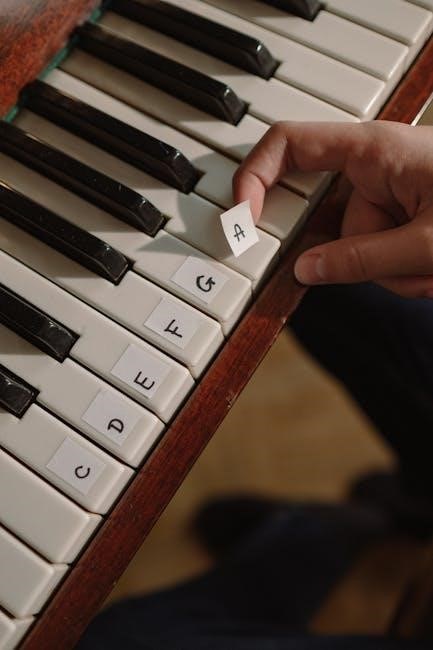
Practicing Techniques: Scales
Piano scales and arpeggios PDF guides suggest starting hands separately, focusing on slow, even tempos, and utilizing a metronome for consistent rhythm.
Hands Separately Practice
Piano scales and arpeggios PDF materials consistently emphasize the importance of practicing with each hand independently before attempting to combine them. This foundational step allows for focused attention on fingering, rhythm, and evenness of tone production without the added complexity of coordination.
Beginners, especially those utilizing PDF resources for guided practice, should dedicate sufficient time to mastering each hand’s pattern. Focus on learning the correct fingerings as outlined in the PDF, and strive for a consistent, slow tempo. Avoid the temptation to speed up until the pattern feels comfortable and secure in each hand individually.
This isolated practice builds muscle memory and establishes a solid technical base, making the subsequent hands-together practice significantly more manageable and effective. It’s a crucial step often highlighted in comprehensive piano scales and arpeggios PDF guides.
Slow and Even Tempo
When working through piano scales and arpeggios PDF exercises, maintaining a slow and even tempo is paramount; Resist the urge to rush; prioritize accuracy and consistency over speed. Many PDF resources will suggest starting at a tempo where you can comfortably play each note with clarity and precision.
The goal isn’t to impress with velocity, but to build a solid foundation of technique. An even tempo ensures that each note receives equal weight and duration, fostering a sense of musicality. Utilizing a metronome, often recommended within piano scales and arpeggios PDF guides, is invaluable for developing this rhythmic precision.
Only increase the tempo gradually, and only when you can consistently play the scale or arpeggio flawlessly at the slower speed. Remember, quality trumps quantity – a slow, even practice session is far more beneficial than a fast, sloppy one.
Using a Metronome
A metronome is an indispensable tool when practicing piano scales and arpeggios, often highlighted in comprehensive PDF resources. It provides a steady pulse, crucial for developing accurate timing and rhythmic consistency. Many PDF guides will suggest specific tempos to begin with, gradually increasing as proficiency grows.
Initially, set the metronome to a slow tempo where you can comfortably play the scale or arpeggio without rushing or hesitating. Focus on aligning each note precisely with the beat. This builds a strong internal sense of rhythm.
As you become more confident, incrementally increase the tempo, ensuring you maintain accuracy. The metronome isn’t a race; it’s a teacher, revealing inconsistencies and helping you refine your timing. Consistent use, as encouraged in PDF practice plans, will yield significant improvements.
Relaxed Hand Position
Maintaining a relaxed hand position is paramount when practicing piano scales and arpeggios, a point often emphasized within detailed PDF instructional materials. Tension hinders fluidity and can lead to injury. Visualize your hands as supple and adaptable, not rigid or forced.
Avoid collapsing your fingers or gripping the keys too tightly. A curved finger shape promotes efficient movement. Many PDF resources include diagrams illustrating correct hand posture; Focus on using your arm weight to assist with the motion, rather than relying solely on finger strength.
Regular breaks and mindful awareness of tension are vital. A relaxed approach, as advocated in practice PDFs, allows for greater speed, accuracy, and musical expression.
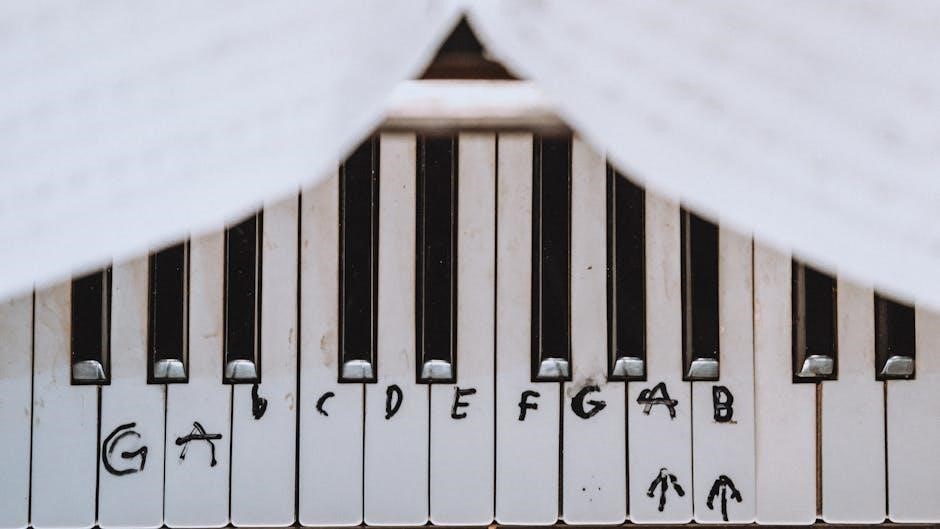
Practicing Techniques: Arpeggios
Arpeggios demand focused technique; familiarize yourself with fingering, then practice hands together, striving for simultaneous note strikes, as detailed in PDF guides.
Fingering Familiarization
Fingering is paramount when tackling arpeggios. Before attempting hands-together practice, dedicate significant time to mastering the correct finger placement for each arpeggio form. Many PDF resources clearly illustrate recommended fingerings – utilize these visual aids! Don’t rush this stage; slow, deliberate practice builds muscle memory and prevents ingrained errors.
Initially, focus on one hand at a time. Repeat the arpeggio ascending and descending, consciously noting how each finger transitions to the next. Pay attention to smooth transitions and avoid unnecessary tension. Consistent practice with correct fingering will ultimately allow for faster, more fluid execution. Remember, a solid foundation in fingering unlocks the potential for greater speed and accuracy, as highlighted in many instructional PDFs.
Hands Together Practice
Transitioning to hands together practice requires patience and a methodical approach. After solidifying individual hand technique – often guided by PDF exercises – begin slowly. Resist the urge to speed up; prioritize accuracy and synchronization over velocity. Focus intently on hitting each note simultaneously, listening carefully for any discrepancies between your hands.
Many PDF resources offer coordinated exercises to aid this process. Start with simple arpeggios and gradually increase complexity. Maintain a relaxed hand position, avoiding tension that can hinder coordination. If you encounter difficulties, revert to practicing hands separately before attempting the combined version again. Remember, consistent, slow practice is key to building coordination and achieving a polished, unified sound, as detailed in comprehensive piano technique PDFs.
Focus on Simultaneous Note Strikes
When practicing arpeggios, a crucial element is achieving simultaneous note strikes with both hands. This isn’t about speed, but precision. Many PDF resources emphasize this, often including exercises designed to build this coordination. Visualize the notes aligning perfectly before you play, and listen intently for a clean, unified sound. Avoid rushing; slow, deliberate practice is paramount.
Initially, it may feel awkward, but consistent effort will improve synchronization. Pay attention to your hand posture – avoid collapsing your fingers or tensing your wrists. Utilize PDF guides that highlight proper technique. Think of your hands as a single unit, moving in unison. This focus on simultaneous strikes elevates arpeggio playing from a mechanical exercise to a musically expressive skill, as demonstrated in advanced technique PDFs.
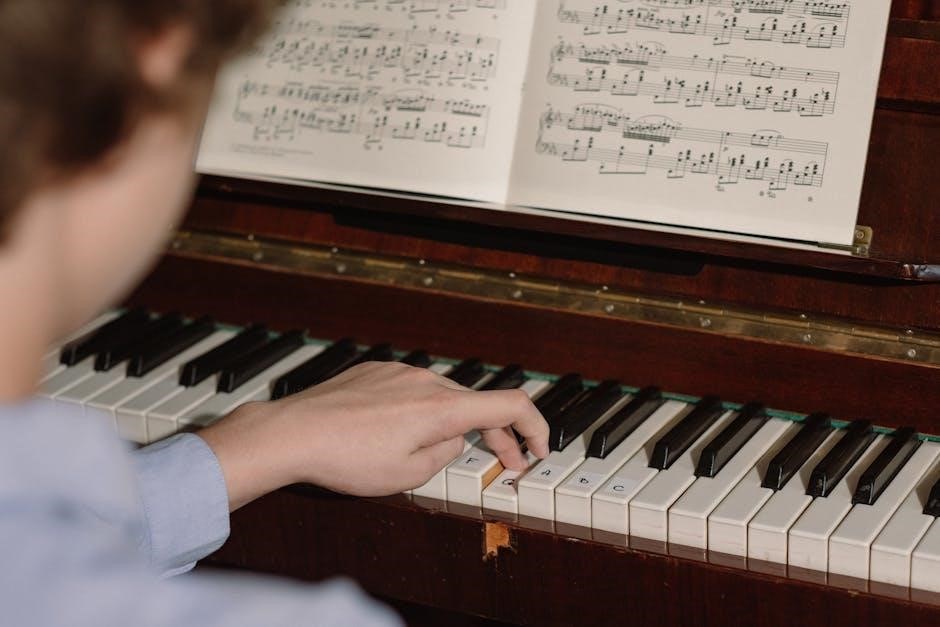
Finding and Utilizing PDF Resources
Numerous piano scales and arpeggios PDF resources are available online, offering structured practice materials. Evaluate quality and integrate them into your routine effectively.
Sources for Free Piano Scale & Arpeggio PDFs
Finding reliable, free PDF resources for piano scales and arpeggios requires a bit of searching. Websites like 8notes.com offer a substantial library of scales and arpeggios in PDF format, categorized by key and type. MusicTheory.net provides interactive exercises and downloadable charts, though not strictly PDFs, they are incredibly helpful.
Teoria.com is another excellent resource with downloadable materials. Many piano teachers also create and share free PDFs on their websites or through platforms like Teachers Pay Teachers – filtering for free options is key. IMSLP (International Music Score Library Project) sometimes contains scale and arpeggio exercises within larger method books. Be cautious when downloading from unfamiliar sites; always scan for viruses and ensure the source is reputable to avoid malware.
Evaluating the Quality of PDF Resources
Assessing the quality of free piano scale and arpeggio PDFs is crucial for effective learning. First, check for accurate fingering – incorrect fingerings can hinder progress and build bad habits. Look for clear notation; the PDF should be easy to read with well-defined notes and symbols.
Ensure the resource includes a variety of keys and scale types (major, minor – natural, harmonic, melodic). A good PDF will also indicate the correct dynamic markings and tempo suggestions. Beware of resources with numerous errors or unclear instructions. Cross-reference information with a trusted piano method book or teacher to verify accuracy. Prioritize PDFs created by experienced musicians or educators for the most reliable content.
Integrating PDFs into Your Practice Routine
Utilizing piano scale and arpeggio PDFs effectively requires a structured approach. Don’t simply print and play; schedule dedicated practice time specifically for these exercises. Begin by focusing on one or two scales/arpeggios per session, mastering them before moving on.
Use the PDF as a visual guide alongside a metronome to build consistent tempo and rhythm. Incorporate hands-separate practice initially, then gradually combine hands. Regularly revisit previously learned scales and arpeggios to reinforce muscle memory – consistent review is key. Treat the PDF as a supplement to, not a replacement for, guidance from a qualified piano teacher.